Showing posts with label craftsmanship. Show all posts

Sunday, November 08, 2020

Small Safe Steps workshop


If your team wants to have better strategies to manage large and risky changes, improve their slicing skills, or practice techniques as parallel changes, branch by abstraction, look at this Small Safe Steps workshop.

I have prepared information so that anyone can easily facilitate the workshop.

Please use the material, run the workshop, give me improvement feedback.  And if you need advice on running or adapting it, contact me, and I will be happy to help.


Small Safe Step workshop


Additional references:

Recommended readings:


Saturday, November 17, 2018

Good talks/podcasts (Nov 2018 I)


Some good talks that I show lately:

Sunday, October 28, 2018

My Software Crafters Barcelona 2018

Dates: 29th, 30th September
Official site: http://scbcn.github.io/

A month ago I had the pleasure of attending the Software Crafters Barcelona 2018. I think it's the fourth time I've been to this conference and it's among my favorites.

I loved this year's edition. The first two years the conference had around 80 attendees and an excellent environment for networking and learning in community.
Last year the conference, and we were around  200 participants, which was a major logistical challenge. Although I liked last year's decision, the truth is that we lost some of the networking and community feeling. However, this year the organizers have overcome all the challenges and achieved the same atmosphere that we had in the first editions.

The venue was in the center of the city, very well communicated and comfortable. The rooms used for the talks and workshops were, I think, very suitable. The only thing I think could be improved is that the English track was a little difficult to access. Still, I think the venue was a great choice.

Another thing I loved this year, is that the open space part was done on Saturday afternoon, instead of Sunday, as was done before. This decision has allowed more people to participate in these open space sessions.


The sessions I attended:


A cowgirl journey Slides Meritxell Calvo Video
Entertaining and inspiring talk about the path she has taken within the industry and the milestones that have marked her. Very interesting to see the importance of having women referents in technology, community and mentoring.

Communication Antipatterns and where to find them Slides Emma Baddeley
As an introductory talk it went very well. He did some emphasis on distributed teams but it wasn't the main focus.

The Science of Not Estimating Slides Anemari Fiser, Javier Sánchez Rois.
An excellent summary of the problems with estimations and how to use some other alternatives as probabilistic forecasting based on real data from the team. It was fascinating how they used Montecarlo simulations based in the past cycle time and lead time of the user stories delivered by the team.
Some interesting references:


Reactive microsystems Slides Ignasi Marimon-Clos 
The talk described how to evolve from Rest Microservices to more reactive microservices using CQRS. For each step of the evolution, Ignasi described the pros and cons and the actual options for the next step. The content of the talk was great, but the following conversation was even more significant.

Kubeflow (Workshop) Laura Morillo
We follow the lab "Introduction to Kubeflow on Google Kubernetes Engine"
It was an introduction to kubeflow and concepts needed to use it (kubernetes, ksonnet). It was perfect for me because it was not to depth but let me understand the architecture and the development flow.

Parallel Changes. Big changes in small steps.
I facilitated this workshop and from the feedback I got, it was quite good. :) Slides and additional information in the following blogpost.


Timeless Streams Slides Javier Salinas Polo https://twitter.com/MuSTa1nE
Interesting session on how to solve the problem of time use in systems that use event streams. Finally, they came up with a solution by sending timestamps as events. They used these marks to demarcate periods so that they could test without the need to depend on time.


Open space Sessions:

Going to production, Help! Session moderated by Laura Lacarra
During the session, we shared different ideas about how to push to production and operating software systems. We could see how there were two groups, one more aware of the DevOps culture that considered production as part of value delivery and another group that still saw a clear separation between development and operations. We talked about incident reports and other learning tools (game days, chaos engineering). We also talked about the DORA report, and some reference books.


When there is diversity, do you know how to manage it? Session moderated by Raquel Lainde
Some ideas that I extracted from the session:
  • We should provide training on diversity (because it is a great asset, but we usually are not prepared to manage it).
  • Learn about biases and social psychology help us to understand the problems and our reactions.
  • It is much easier for someone with privileges to correct or point out non-inclusive behavior to another person with privileges (less risk involved).
  • It is essential to identify and try to be attentive to situations of discrimination.
They recommended this book that I already have on my reading list:

Other notes and stuff:

As every year I leave with a lot of new ideas, experiments to do, some devirtualizations, a lot of interesting conversations and a great sense of community. I am increasingly proud to have a profession that considers sharing and learning to be fundamental. 

Thank you very much to the organization for the impressive work you do. Each edition, I left Barcelona with the desire to return the following year. 


Saturday, October 27, 2018

Good talks/podcasts (Oct 2018 II)


Some good talks that I show lately:

Monday, October 01, 2018

Slides Taller Parallel Changes (Barcelona Software Crafters 2018)

Slides que he usado para el taller sobre cambios paralelos en la Barcelona Software Crafters


Presentación original:
Taller Parallel Changes (Barcelona Software Crafters 2018)


Esta ha sido la cuarta versión de este taller. Gracias a todos los asistentes por el valiosisimo feedback que me habeis dado y que me va a permitir mejorar el taller.

Muchas gracias a la organización por haber contado conmigo y por todo el apoyo.


Si has estado en el taller y quieres dejar feedback: https://joind.in/event/software-crafters-barcelona-2018/cambios-en-paralelo-cambios-grandes-pasos-pequeos-workshop

Monday, September 10, 2018

Good talks/podcasts (Sept 2018 I)


Some good talks that I show lately:

Friday, August 31, 2018

Good talks/podcasts (Aug 2018 II)

Some good talks that I show lately:

Tuesday, August 07, 2018

Good talks/podcasts (Aug 2018 I)

Some good talks that I show lately:

Sunday, July 29, 2018

Sunday, June 24, 2018

Good talks/podcasts (May 2018 II)


These are some interesting talks/podcast that I've seen/heard during this month:

Saturday, June 16, 2018

Pamplona Software Crafters 2018

This post is in Spanish because this conference and all the content was in Spanish.

Otro año más (y van tres), he tenido la gran suerte de poder asistir a la conferencia Pamplona Crafters. Esta conferencia mezcla charlas preestablecidas con open space y este año, muy acertadamente, también han incluido una serie de talleres.

Aunque en todas las conferencias a las que voy, aprendo y disfruto mucho, tengo que confesar, que en estos últimos dos años, la Pamplona Software Crafters es la que más me gusta. Supongo que es la combinación de la gente que vamos, las charlas y la tematica, con que me gusta Pamplona y por supuesto la impecable organización de los amigos de 540.


En cuanto a la conferencia en si, he asistido a las siguientes charlas/talleres:

  • Modelos mentales, complejidad y software (Arturo Herrero) (Video) Esta es una de las charlas que más me gustaron de toda la conferencia. Es un tema que me interesa, puesto que al igual que a Arturo he descubierto que el tema de interesarme por la complejidad y los modelos mentales me permite entender y relacionarme mucho mejor. Arturo ha escrito un muy interesante blogpost al respecto, incluyendo las slides que utilizo: https://arturoherrero.com/mental-models-complexity-and-software/ 
  • One Page Product Design (Jorge Barroso flipper83) Interesante charla sobre las ventajas de compactar, visualizar, gran cantidad de información mediante diagramas, screenshots, diseños en una única página/diagrama de forma que la podamos pegar por las paredaes, poner en alguna zona de paso, y la riqueza de conversaciones e impacto que esto genera… Una imagen vale más que mil palabras, y esa imagen pegada al lado de la máquina de café 
  • Sobreviviendo en producción. Construyendo una cultura de aprendizaje. (eferro) A petición de Modesto San Juan, propuse esta sesión para el Open Space. En ella, hable de como generar una cultura de aprendizaje comenzando a partir de la gestión de las inicidencias y usando como el Blameless Incident Report como medio. Esta aproximación la he usado en TheMotion y ahora en Nextail y la verdad es que ha funcionado muy bien. Tengo pendiente un blog post al respecto.
  • Taller Refactoring, aprendizaje y economía (Luis Artola, Guillermo Galmazor). Disfrute mucho en este taller, puesto que por necesidad temporal no le estoy pudiendo dedicar mucho tiempo al desarrollo, asi que cualquier oportunidad de hacer algo técnico lo disfruto muchisimo. El taller en si pretendia resolver la kata trivia de Jbrains (https://github.com/jbrains/trivia) aplicando Golden Master o Subclasses.  Como siempre con Luis y Guille, el disfrute viene de lo didacticos que son. Me gusto mucho y me quede con varias notas sobre la estrategia Golden Master para cuando tienes código legado cuyo compartamiento sólo puedes observar viendo su salida por consola.
  • El código como una forma de expresión (patxangas) Divertidisima e interesante charla sobre el uso creativo del código como medio de expresión. Muy impactante. Me trajo muchos recuerdos e ideas a la cabeza (Demoscene, videoarte, música experimental, etc). Además del contenido, siempre me encanta como se expresa y trasmite @patxangas sobre los temas más variopintos. Slides: https://slides.com/interzonas/el-cdigo-como-una-forma-de-expresin#/
  • Mide más y sufre menos (Modesto San Juan) Charla introductoria sobre la necesidad de instrumentar nuestro software de forma que dispongamos de información real para tomar decisiones. Quizás se me quedo algo corta, pero por lo que comente con Modesto, yo no era el público objetivo puesto que ya estoy convencido. En cualquier caso es importante que se mande de forma continua este mensaje ya que muchos de los desarrolladores se centran sólo en la parte funcional sin tener en cuenta que eso es sólo una parte de su trabajo.
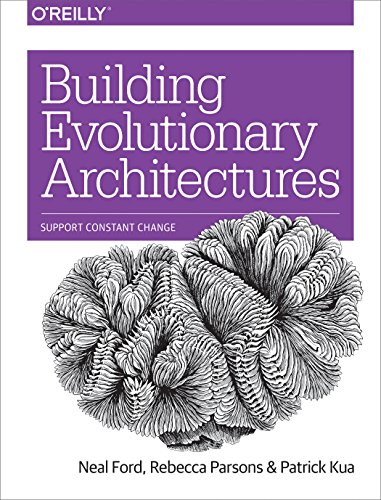
  • Evolutionary Architecture (María Gómez) Esta charla me gusto mucho en contenido. Complementa desde un punto de vista algo más práctico a las charlas relacionadas de algunos de sus compañeros de ThoughtWorks. La charla se basa en lo descrito en el libro Building Evolutionary Architectures  (http://evolutionaryarchitecture.com/).
  • Cómo no ser un tech lead (Gamarra). Esta sesión de open space se organizó como una charla abierta en la que se comentó algunas ideas sobre cómo incentivar una a tus compañeros a formarse, crecer, etc. Cogi algunas ideas interesantes de lo que estaban haciendo en Tuenti y en Liferay, que espero poder poner en práctica.
  • ¿Arquitectura sin arquitectos? (German Del Zotto) Esta sesión planteo varias decisiones y balances que se tienen que tomar cuando estamos deciendo temas de artquitectura. German los describio como desciones a tomar, no por un arquitecto, sino como un habilidad que deberian poseer cualquier desarrollador. Me quede con ganas de más, pero seguro que puede quedar con German y profundizar en el tema. :)


Como siempre lo que más me ha gustado y lo que más me ha enriquecido han sido las grandes converaciones. Me vienen a la cabeza unas cuantas:

  • Con cataflu durante uno de los desayunos (además es una gran desvirtualizacion). 
  • Con nabaroa durante las cervezas del jueves (otra genial desvirtualización). Además hizó una impresionante lightning talk  acerca de las subidas y bajadas que experimentamos durante nuestra carrera y de cómo las ha gestionado ella.
  • Con Arturo Herrero sobre el mercado para desarrolladores de software en UK y sobre el value investing.
  • Con Helder y Marco Alacot sobre aprender/enseñar a programar, agilidad, y otras hierbas.
  • Con bberrycarmen  después de la sesión de Arturo sobre modelos  mentales. Con luisrovirosa sobre la charla que dio Martin Fowler en Madrid la semana anterior y de cómo “hemos sido engañados” con el tema de la agilidad, puesto que podemos resumirla en XP+DevOps.

Me resulto gracioso que rafaoe y algún que otro “milenial” tuviese curiosidad de cómo desarrollabamos en los 90s. :)
También disfrute de largas e interesantisimas conversaciones con jaceguzigiella, y mucha más gente…

Por supuesto disfrute como un enano con tejones como Saski, Fran Ortiz, amigotes de Alea como Apa, Ruben y Nestor y con muchisima gente más (sharpbitesalfredodev, Toño, jorgeuriarte, alfredocasado, ...)
Me quedé con pena por no haber podido hablar y disfrutar con todos, pero llega un punto en el que es prácticamente imposible.

He estado repasando la lista de asistentes (https://twitter.com/pamplonaswcraft/lists/asistentes-2018) y he estado tentado de pegarla por aquí, puesto que compartir tiempo con todos ellos ha sido un autentico placer...


Bola extra:
Este año no he podido ir con familia, lo que por un lado me da algo de pena, pero que por otro lado me ha permitido aprovechar el viaje de otra forma. Me he organizado para poder ir con Alberto Paz, Modesto San Juan y Jerolba. La verdad que ha sido como tener dos dias más de confencia…  Grandes conversaciones y mucho aprendizaje.

Foto de @benjymontoya (usada con autorización)

Muchas gracias a los organizadores (@wricka69, @pabloalbizu, @gorkma, Mikel Ros) … Sois muy Top!!!

PD: Iré actualizando el post según vaya recopilando recursos.

Saturday, June 02, 2018

Immutable infrastructure (tech pill)

Immutable infrastructure is a pattern to change/evolve processes without modifying the running code, actual configuration, and the base components (library, auxiliary processes, SO configuration, SO packages, etc).  In summary, avoid any manual or automatic configuration change to the running systems.
But if we don't allow changes, how can we evolve our application and service?  Easy, change the whole piece (function, container, machine) in one shot...


So to make any kind of change (code, configuration, SO) we don't connect to the target box to execute commands, we "cook" a new artifact (container image or machine image) and use it to create a new instance (container or machine) with the changes. In the past, the cost/time to create a new instance was huge, so in order to optimize the process, we tend to execute the minimal change needed to run the new version. I mean, use a manual or automatic process to ssh to the box, install the needed packages, change the configuration, update the code, etc.

But...
¿What happens when the ssh dies in the middle of an update?
¿And if we have a problem installing a package?
¿How can we be sure about the actual state of a machine?
¿How can we calculate the changes to execute if we are not sure about the actual state of a machine?

Making changes in a machine using ssh, is not a transactional operation so we can have a failure in the middle of the process.

The solution, Immutable Infrastructure...
Create a new artifact and run it. Without intermediate states. Only "Not Ready" or "Ready". Simple.  And if something is wrong, destroy the artifact and try again.

This pattern is at the core of the principals container-orchestration systems and PaaS (kubernetes, swarm, mesos, heroku, open shift, Deis, etc).

Why is a good idea

  • Simplicity. Is an order of magnitude easier to destroy a resource and create a new one from scratch than to calculate the deltas to apply and execute them. 
  • If we need scalability we need to support this patter anyway.
  • Right now is easy to implement with the help of the different clouds and PaaS providers.
  • Very easy to return to the previous version.
  • Very easy to troubleshoot a problem, because there are no intermediate states. You can know the exact content of a running version (the SO state, the concrete conf, the concrete code, etc).
  • With this approach, there is no difference between languages and running environment (python, jruby, java, all the same...).  Is a general solution for all the technology your systems requires.

What are the downsides

  • In some cases, the bootstrapping/setup time to use a new machine is larger than modifying an existing one. But the time is improving continuously and if we have a scalable architecture we already are dealing with it. Another solution is to use the patter at a different level, for example, functions or containers instead of at the machine level.
  • This pattern requires more and longer steps that the classic approach so it is not practical to do it without automation. But not automatize this kind of task is shooting in your foot anyway.

Implementation Samples

As a general implementation strategy we need to be capable to make the following steps:
  1. Start a new running process (without processing workload).
  2. Detect when this running process is ready to accept real workload.
  3. Connect the running process to start processing workload.
  4. Disconnect the old running process to stop receiving new workload.
  5. The old running process completes the workload that already has.
  6. Detect that all the pending workload of the old process is completed.
  7. Destroy the old process.


If we talk about web servers the steps can be:
  1. Start a new machine/container running the web server in an internal endpoint.
  2. Detect when the web server is ready using the health check endpoint.
  3. Connect the new web server internal endpoint to the load balancer with the external endpoint.
  4. Inform the old web server to stop processing new traffic and disconnect from the load balancer.
  5. Detect when the old web server finished.
  6. Destroy the old web server.
If we talk about a background queue job processor the workflow can be:
  1. Start a new machine/container running the background queue job processor.
  2. Detect that the new machine is processing jobs from the queue.
  3. Inform the old background queue job processor to not get new jobs.
  4. Detect when the old background queue job processor has completed its pending work.
  5. Destroy the old background queue job processor.
We can think similar steps for other kinds of processes.

Design Notes

As we can see, this pattern requires collaboration from our code and support from the platform, but I assume that this is part of designing scalable systems that make great use of the capabilities of the cloud. For a good reference about designing applications for the cloud, please read The 12 Factor Apps

We can apply the same pattern at different levels. Virtual machines, Containers, Functions... The ideas are the same but the granularity is different.

Using Infrastructure as Code is recommended prerequisite to implement this pattern.

Conclusions

  • The platforms are going in this direction so they have a lot of help to implement it.
  • This is the fundamental pattern for:
    • Scale up and down in the cloud.
    • Advance patterns for deploy with zero downtime (blue-green deploy, rolling deploy, canary releasing, etc).

Other tech pills:


Saturday, May 26, 2018

Infrastructure as code IaC (tech pill)

Infrastructure as code (IaC) is the practice of defining/declaring the infrastructure we need for a system using some kind of machine-readable source files. These source files are used by a tool to provision, create or maintain in a defined state our infrastructure.

These definitions help to provision/create a different kind of resources, compute, storage, communication services, network


For cloud-based infrastructures, we can use these definitions to create "virtual resources" and to configure them to be in a certain state. For example, we can create a virtual machine with an initial  OS image and later install some software and configure it.

In a bare-metal environment, we can use the definition to configure a fixed number of machines and devices already defined in an inventory.

The goals of this practice are:

  • Avoid server configuration drifting
  • Avoid proliferation of Snow flake Servers.
  • Reduce drastically the maintenance cost and the total cost of ownership.
  • Allow easy and infrastructure evolution.

As a collateral effect, this practice also allows:
  • Use development practices for the infrastructure (version control, testing, audit, collaboration, live documentation...).
  • Create on-demand systems for development, QA, testing, and experimentation.
  • Developers collaboration.

Cons:  really, it's 2018... no, seriously I don't find a good reason to not to create infrastructure as code. And when the problem is that these resources are difficult or impossible to define using code or some kind of definition, we should avoid them as much as possible.

General Approaches and styles


  • Push. We execute a tool that parses the definitions, calculate the changes to do and execute them.
  • Pull. Each node/device have its definition and execute all the time in a loop executing the needed changes.
  • Push + Pull. A combination of the previous ones, so we can push a change (when we need to be sure or force some changes) or wait until each node/device update its configuration 
Sometimes we can restrict the IaC to provision the low-level infrastructure. For example, we can use this practice to create a PaaS (using Kubernetes, or similar), so the rest of elements are dynamically provision inside the PaaS we have created.

Related Tools:


In summary, IaC is a core DevOps practice and is the base for a lot of the innovations and evolution that the cloud brings us. It is a must for modern development in the cloud and also very recommendable for on-premise deployments.


Other tech pills:


Sunday, May 20, 2018

Good talks/podcasts (May 2018 I)

These are some interesting talks/podcast that I've seen/heard during the past month:


Saturday, May 05, 2018

Good talks/podcasts (April 2018)

These are some interesting talks/podcast that I've seen/heard during the past month: